Mission Portfolio
From south-polar payload delivery to sample return and edge computing — ORBITBeyond's mission portfolio is engineered to establish permanent lunar infrastructure.
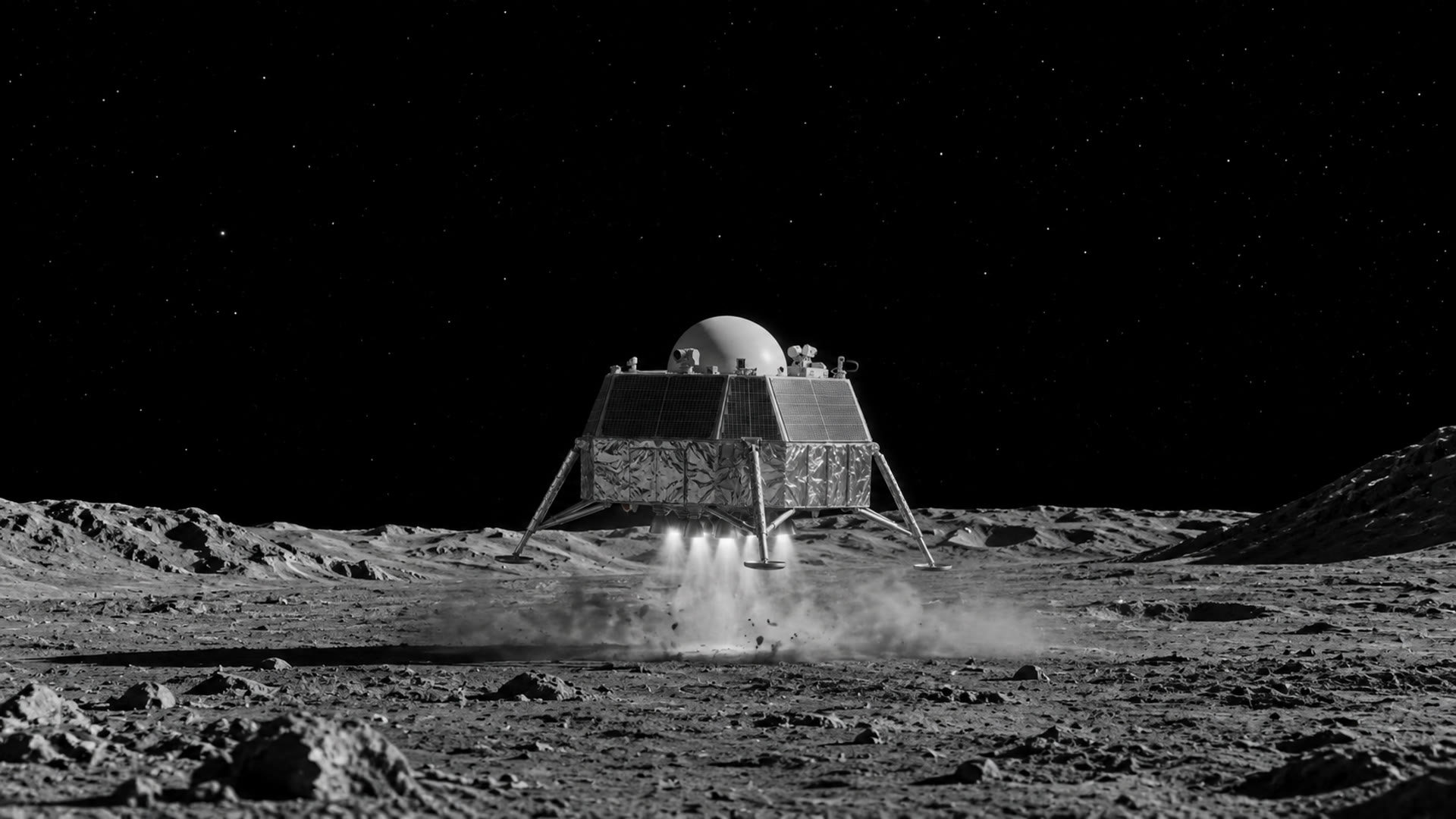
OB-1 is ORBITBeyond's inaugural south-polar lunar delivery mission. Designed to land scientific and commercial payloads at the lunar south pole — one of the most scientifically valuable and resource-rich locations on the Moon — OB-1 establishes the foundation for ORBITBeyond's growing mission cadence.
The mission leverages ORBITBeyond's Extensible Lunar Vehicle Platform, a precision lander designed for high-mass delivery and surface operations in permanently shadowed regions near the south pole.
Deliver up to 1,000 kg of payload to the lunar south-polar region with precision landing capability. Demonstrate end-to-end lunar transport service for commercial customers. Establish initial surface infrastructure nodes for follow-on missions.
| Landing Target | Lunar South Pole |
| Target Launch | 2029 |
| Mission Type | Payload Delivery |
| Night Survival | 14-day lunar night |

OB-2 is ORBITBeyond's sample-return mission, currently in development. Building on the delivery infrastructure established by OB-1, OB-2 will retrieve lunar samples from the south-polar region and return them to Earth — a mission class previously achieved only by national space agencies.
The ability to return samples opens an entirely new chapter for lunar science, enabling high-fidelity analysis of south-polar regolith, volatiles, and potential water-ice deposits in Earth-based laboratories.
Collect and return south-polar regolith and volatile samples to Earth. Enable detailed Earth-based analysis of potential water-ice and resource deposits. Demonstrate commercial end-to-end sample-return capability for future government and science partnerships.
| Mission Type | Sample Return |
| Collection Site | Lunar South Pole |
| Return Vehicle | Ascent + Earth Return Stage |
| Status | In Development |
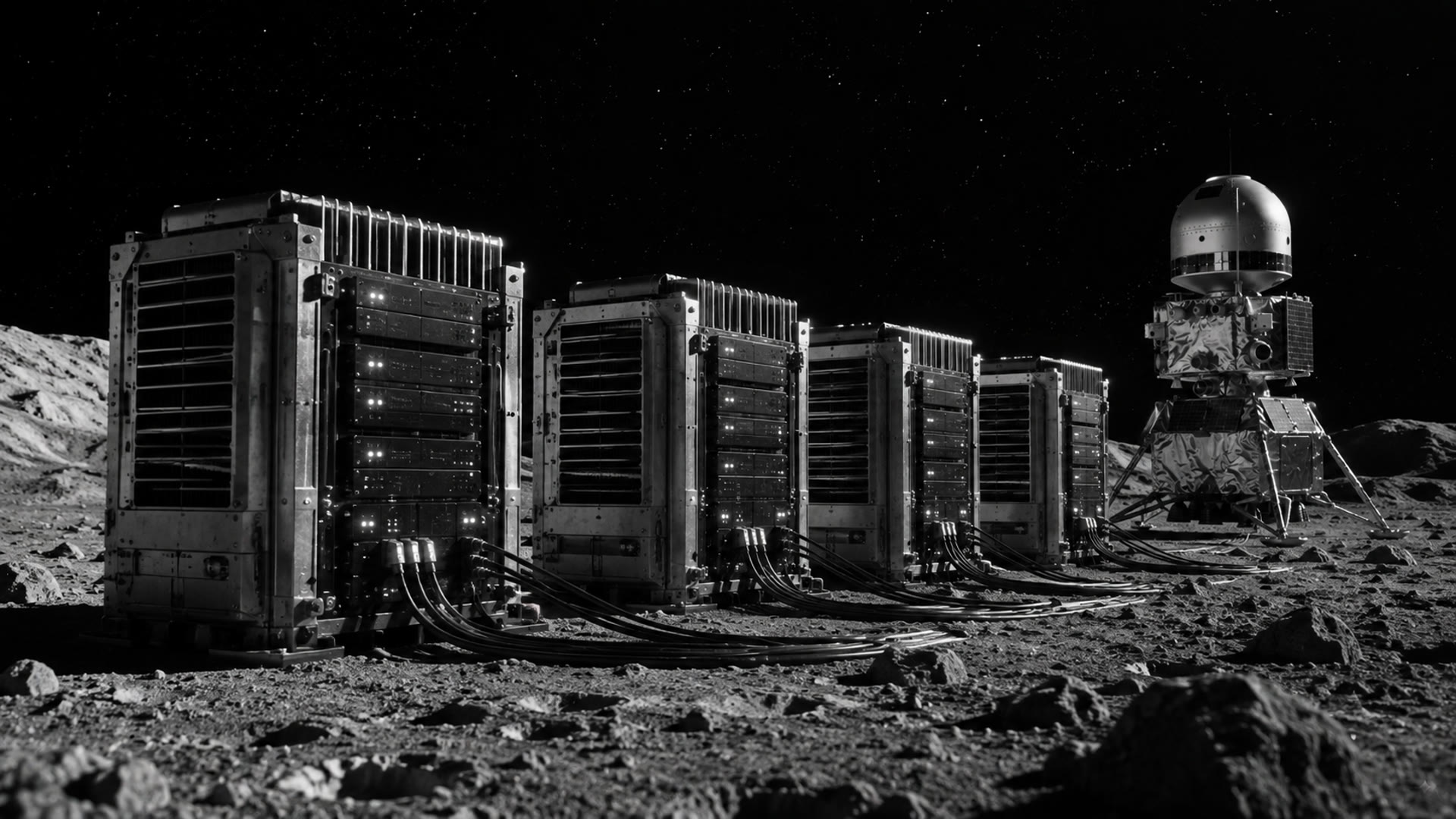
Lunar Edge Compute is a joint venture bringing high-performance computing infrastructure to the lunar surface. Co-developed with commercial partners, the initiative enables real-time data processing, AI inference, autonomous decision-making, and compute-intensive operations directly at the Moon — without the latency of routing data back to Earth.
This represents a fundamental shift in how lunar operations are managed: moving from Earth-dependent systems to autonomous, edge-native architectures capable of supporting the next generation of lunar robotic and human activities.
The Lunar Edge Compute platform supports AI inference workloads, sensor data processing, autonomous navigation, and multi-mission coordination. Operating throughout the lunar day, the system is designed for 14-day lunar night survival through the Tec Masters partnership.
| Deployment | Lunar South Pole |
| Launch | 2029 (co-manifest with OB-1) |
| Night Operations | 14-day lunar night survival |
| Status | Active Development |